Other Works
“...the book is essential reading for anyone wishing to connect more honestly and deeply with a region facing ongoing challenges and profound transformations. ”
“Asquith expertly draws attention to the punishment of the ‘unwary’ - no one, he demonstrates, whether pioneer, rancher, cowboy, Indian, holiday-maker, Hollywood star or retiree, has the requisite qualities for a healthy relationship with Proulx’s Wyoming.”
“One of the best books on Hardy published in recent years...”
John Williams, as the New Yorker noted recently, was author of ‘the greatest American novel you’ve have never heard of.’ He died in obscurity but has enjoyed a literary renaissance due to the worldwide critical acclaim greeting recent reissues of his major novel Butcher’s Crossing, Augustus and particularly Stoner. With films of both Butcher’s Crossing and Stoner already in pre-production it is clear that Williams’ star is in the ascendant. This book is designed to offer a critical introduction to his writing. It is developed through solid scholarly research but is structured and written in a clear and direct style that makes it accessible for academics, students and general readers alike. It offers a clear sense of the novelist’s early life and work, which includes an evaluation of his academic life (he was a professor at the University of Denver) and neglected poetry. The bulk of the book is given over to readings of the three major novels: they offer an appreciation of Williams’ literary craft combined with an assessment of literary and cultural influences and an overview of contemporary critical reactions. Few authors have written such disparate works in terms of subject matter, genre and style, however they are all united in their effort to grapple with deeper existential questions. For whether his characters are riding the Western plains, speaking in the Roman Forum or reading in a dusty library, they all demonstrate Williams’ preoccupation with the ways in which youthful hopes and a strong sense of who we are shaped by life’s accidents. How we make the life meaningful, learn to love another human being, confront failure – these are the well points of Williams’ understated tragedies. Unfortunately, such meditations are rarely fashionable; but neither are they ever unfashionable. George Orwell observed that the only true critic is time: this study makes clear that Williams’ time has come.
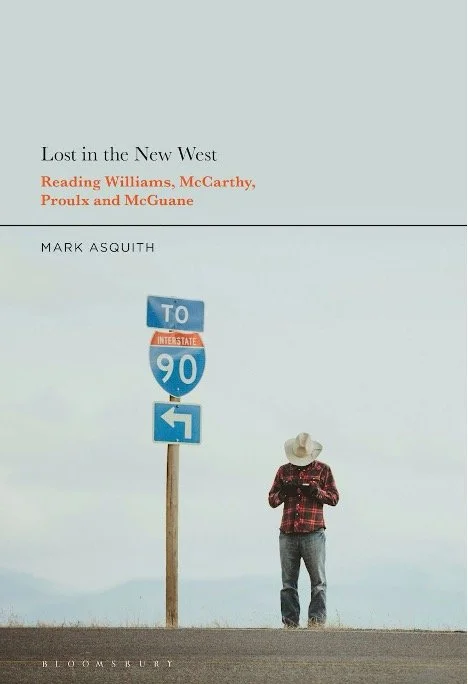
Lost in the New West: Reading Williams, McCarthy, Proulx and McGuane
Lost in the New West investigates a group of writers – John Williams, Cormac McCarthy, Annie Proulx and Thomas McGuane – who have sought to explore the tensions inherent to the Western, where the distinctions between old and new, myth and reality, authenticity and sentimentality are frequently blurred. Collectively these authors demonstrate a deep-seated attachment to the landscape, people and values of the West and offer a critical appraisal of the dialogue between the contemporary West and its legacy.
Mark Asquith draws attention to the idealistic young men at the center of such works as Williams's Butcher's Crossing (1960), McCarthy's Blood Meridian (1985) and Border Trilogy, Proulx's Wyoming stories and McGuane's Deadrock novels. For each writer, these characters struggle to come to terms with the difference between the suspect mythology of the West that shapes their identity and the reality that surrounds them. They are, in short, lost in the new West.
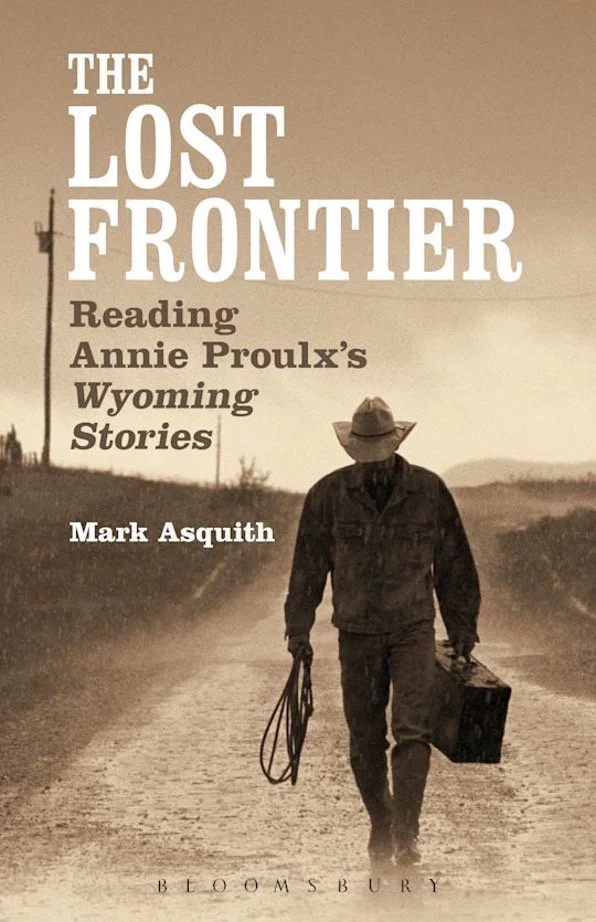
Thomas Hardy, Metaphysics and Music
This original and compelling study reveals that music is not a decorative flourish in the work of Thomas Hardy, but a key to its deepest meanings. It argues that an ear for Hardy’s musical allusions is essential to understanding both the philosophical reach of the novels and poems and, at times, the behaviour of the characters themselves. Countering the familiar image of Hardy as a “rural” novelist drifting between social satire, sensation, and pastoral reflection, Asquith places him at the centre of the Victorian intellectual world. Hardy appears here as a writer intensely engaged with the great questions of his age — evolution, free will, determinism, mesmerism, and aesthetics — using musical metaphor as a way of draw them together. Central to Hardy’s project is the way in which music was being dissected by Darwinian biology and its affective power analyzed by the emerging sciences of physiology and psychology. Music also occupied a privileged place in aesthetic theory, from Walter Pater’s famous claim that all art aspires to the condition of music, to its expression in Arthur Schopenhauer’s philosophy of pessimism and its dramatic realization in the works of Richard Wagner. By bringing these strands together, Asquith offers striking new readings of Hardy’s fiction and poetry, showing how music and musical form shape his portrayal of consciousness, freedom, and the transmission of feeling. This is Hardy as we have not heard him before.
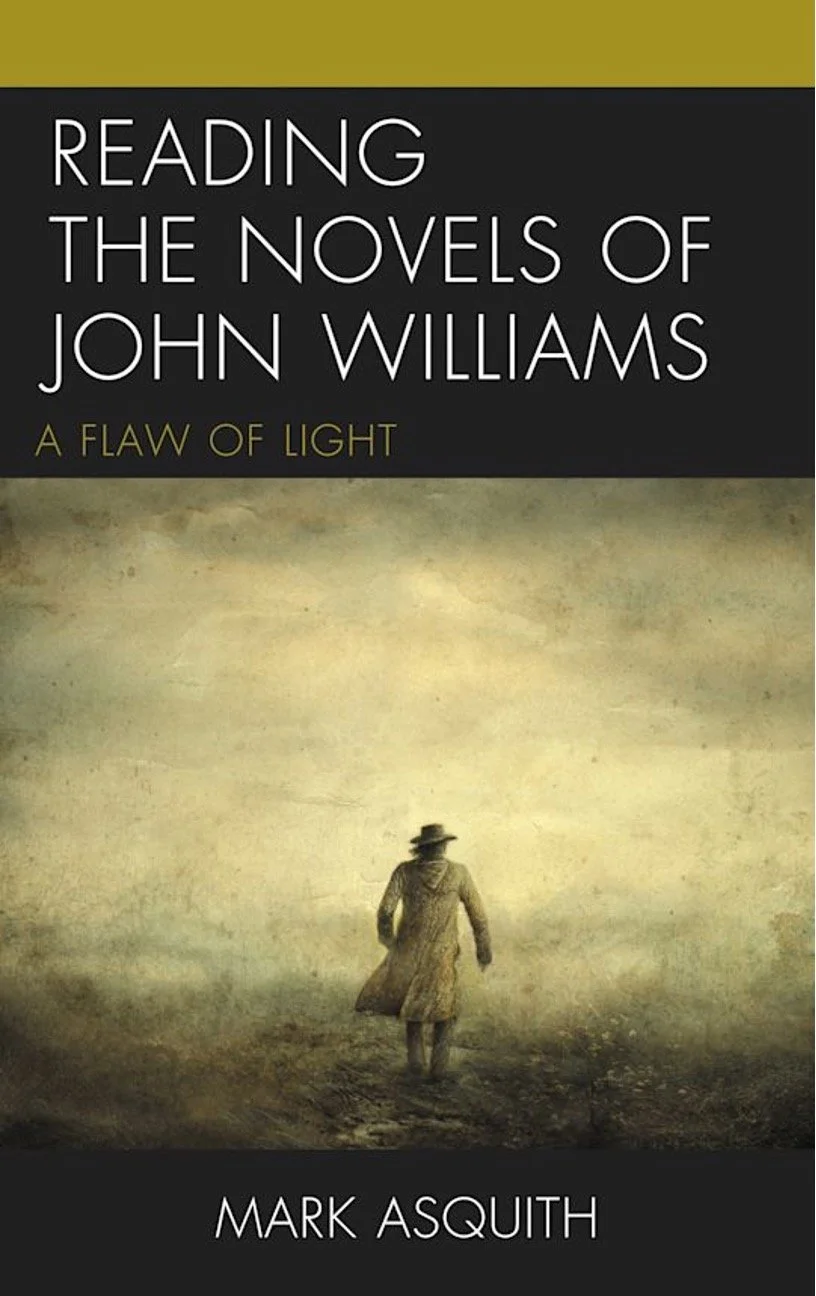
Reading the novels of John Williams: A flaw of light
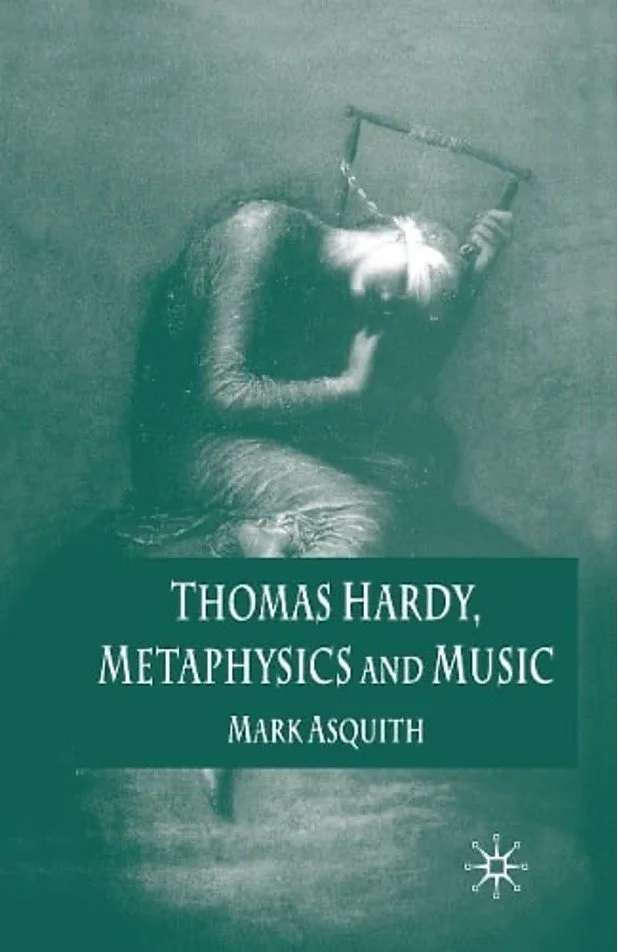
The Lost Frontier
Annie Proulx is one of the most provocative and stylistically innovative writers in America today. She is at her best in the short story format, and the best of these are to be found in her Wyoming trilogy, in which she turns her eye on America's West-both past and present.
Yet despite the vast amount of print expended reviewing her books, there has been nothing published on the Wyoming Stories. The Lost Frontier fills this critical void by offering a detailed examination of the key stories in the trilogy: Close Range (1999), Bad Dirt (2004), Fine Just the Way it Is (2008). The chapters are arranged according to western archetypes-the Pioneer, Rancher, Cowboy, Indian, and, arguably, the most important character of them all in Proulx's fiction: Landscape.
The Lost Frontier offers students a clear sense of the novelist's early life and work, her stylistic influences and the characteristics of her fiction and an understanding of where the Wyoming Stories, and Annie Proulx's work as a whole, fits into traditional and contemporary writing about the American West.
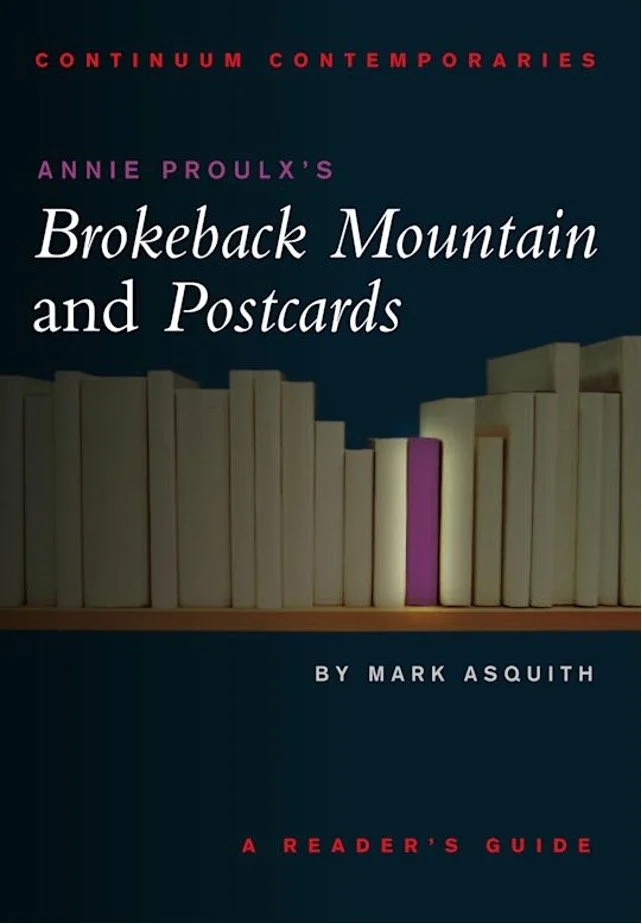
Annie Proulx’s Brokeback Mountain and Postcards
This guide to Annie Proulx's novel Postcards and her short story Brokeback Mountain features a biography of the author, a full-length analysis of the texts, a summary of the their popular and critical reception, a discussion of the recent film adaptation of Brokeback Mountain and its reception and a great deal more. If you are studying either text, reading them for your book club, or if you simply want to know more, you'll find this guide informative, intelligent, and helpful.